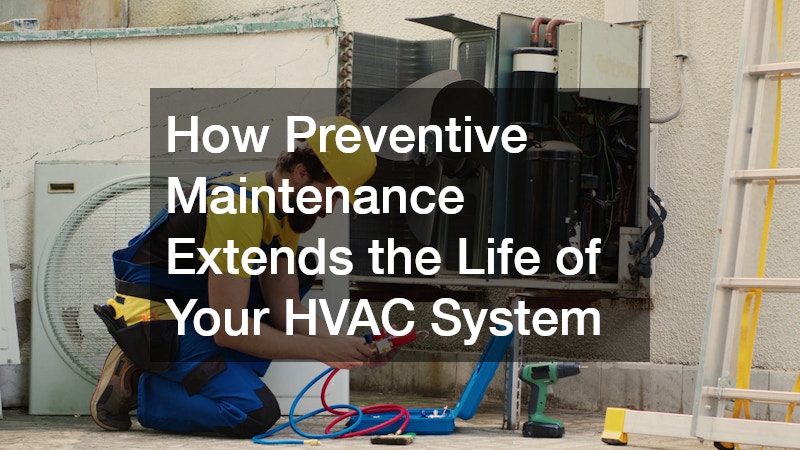
Homeownership comes with a long list of responsibilities, but few are as critical—or as financially consequential—as managing your home’s climate control equipment. These complex networks of machinery are the unsung heroes of our daily comfort, silently working day and night to keep us cool during the sweltering heat of summer and warm during the bitter chill of winter. However, despite their vital role, these systems are often taken for granted. Many homeowners only think about their heating and cooling units when they suddenly stop working, usually on the hottest or coldest day of the year. By that point, a minor issue has often cascaded into a catastrophic failure.
The average climate control setup is meticulously engineered to last anywhere from fifteen to twenty years. However, achieving that impressive lifespan is not guaranteed by the manufacturer; it is entirely dependent on how well the machinery is treated after it is installed. Neglect is the primary enemy of longevity. Ignoring basic maintenance does not just shorten the life of the equipment; it slowly chips away at its efficiency, leading to steadily climbing utility bills, uneven temperatures throughout the house, and degraded indoor air quality.
Fortunately, you do not need an engineering degree to protect your investment. Extending the lifespan of your equipment is largely a matter of building proactive habits and understanding the basic principles of how the machinery breathes, transfers heat, and uses energy. By shifting from a reactive mindset—waiting for something to break—to a proactive one, you can save thousands of dollars over the decades. This comprehensive guide will walk you through the essential, actionable strategies necessary to maximize the operational life of your equipment, ensuring it runs efficiently, safely, and reliably for many years to come.
Master the Art of Airflow and Ventilation Management
The fundamental principle behind all indoor climate control is heat transfer, and heat transfer relies entirely on consistent, unobstructed airflow. When airflow is restricted, your system has to work significantly harder to move the same amount of treated air throughout your living space. This added strain leads to overheating, increased mechanical wear and tear, and eventually, premature component failure. Protecting the equipment starts with managing the environment immediately surrounding both your indoor and outdoor units.
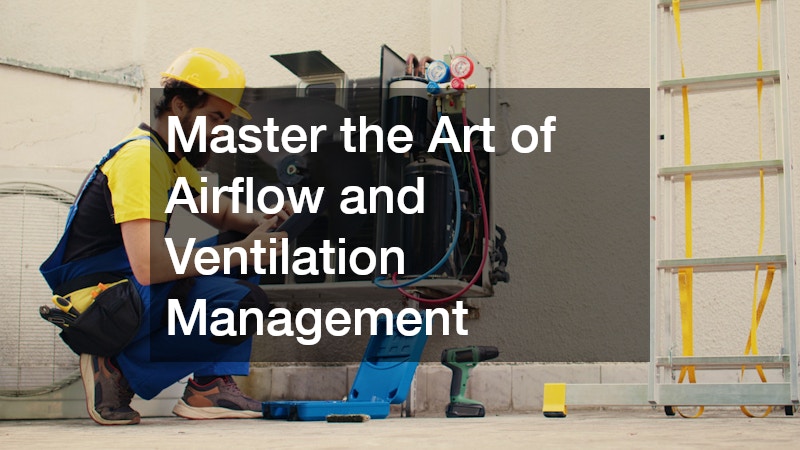
Your outdoor condenser unit is responsible for releasing the heat absorbed from inside your home into the outside air. To do this efficiently, it requires a massive volume of ambient air. When landscaping, debris, or fencing crowds the unit, it begins to recirculate the same hot air it just expelled. This causes the compressor—the heart of your air conditioning setup—to overheat and eventually seize up. To prevent this, strict perimeter management is crucial.
-
Implement the two-foot clearance rule: Keep all bushes, shrubs, and tall grass at least twenty-four inches away from all sides of the outdoor unit.
-
Maintain vertical clearance: Ensure there is at least five feet of unobstructed space above the unit to allow hot exhaust air to dissipate freely.
-
Establish a seasonal cleaning habit: Every spring and fall, rake away dead leaves, pine needles, and grass clippings that accumulate near the base of the condenser.
-
Gently wash the exterior: Periodically use a garden hose (on a gentle setting, never a pressure washer) to rinse away dust, pollen, and cobwebs from the exterior fins.
Indoors, airflow management is just as vital. It is a common misconception that closing vents in unused rooms saves energy. In reality, modern ductwork is sized and balanced for the entire house. When you close registers or block them with heavy furniture, you alter the static pressure inside the ducts. This forces the indoor blower motor to push against a wall of resistance. The blower works longer and harder, drawing more electricity and running hotter than intended. Always keep all supply and return registers open and unobstructed to maintain the pressure equilibrium your equipment was designed for.
If your property utilizes alternative or highly specialized climate technology, airflow and ventilation principles still apply, but they might require different monitoring. For example, ensuring that the ground loop pressure remains stable and that the antifreeze mixture is properly balanced is a unique, critical requirement if you operate a geothermal HVAC system on your property. Regardless of the technology, the goal remains the same: eliminate resistance so the machinery can breathe freely.
Prioritize Strict Filter Replacement Schedules
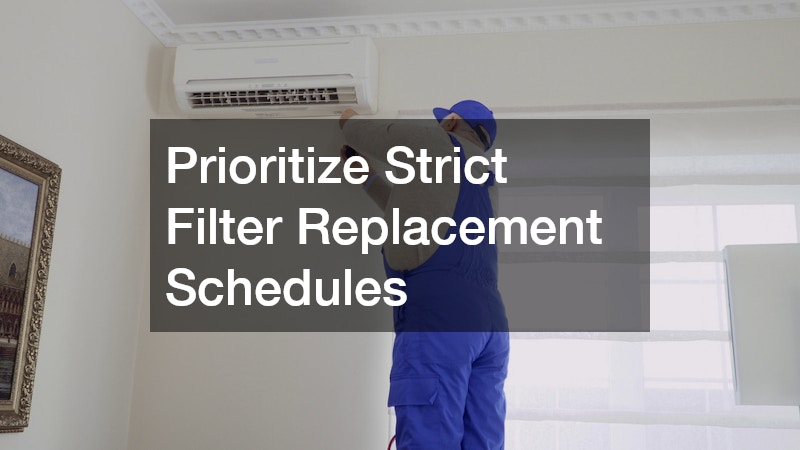
If there is a single, non-negotiable habit you must adopt to prolong the life of your equipment, it is changing the air filter regularly. The filter is the primary line of defense, designed not just to improve the air you breathe, but primarily to protect the delicate internal machinery from being coated in a blanket of dust, hair, and household debris. When a filter is ignored, it becomes a dense, impenetrable wall.
A clogged filter chokes the entire system. In the winter, restricted airflow means that the heat generated by the burners cannot be pushed into the house fast enough. This heat backs up into the heat exchanger. Over time, the constant overheating and cooling causes the metal of the heat exchanger to expand and contract to the point of metal fatigue, eventually leading to a crack. A cracked heat exchanger leaks deadly carbon monoxide into the home and is a catastrophic failure that often mandates a complete unit replacement rather than a simple furnace repair.
To avoid these costly scenarios, you must establish a strict schedule for evaluating and changing your filters.
-
The 30-to-90 Day Rule: For standard one-inch fiberglass or pleated filters, inspect them once a month. If you hold the filter up to a light and cannot see light shining through, it is time to replace it. Never leave a standard filter in for more than ninety days.
-
Account for lifestyle factors: If you have multiple pets, live in a dusty climate, or have family members with severe allergies, you will likely need to change your filters every thirty days, without exception.
-
Thicker filters last longer: If your home is retrofitted for four-inch or five-inch media cabinets, those specialized filters can typically last between six and twelve months before needing replacement.
Choosing the right filter is just as important as changing it frequently. Filters are rated by their Minimum Efficiency Reporting Value (MERV). While it is tempting to buy the highest MERV rating available to scrub the air of microscopic pathogens, doing so can be detrimental. High-MERV filters are densely woven. If your blower motor is not rated to pull air through such a restrictive barrier, the system will suffocate. This suffocation triggers internal safety limit switches, causing the system to shut down repeatedly and leaving you in need of emergency heating repairs during the coldest months. Stick to a MERV rating of 7 to 10 for optimal balance between air filtration and proper system airflow.
Optimize Thermostat Settings to Reduce System Strain
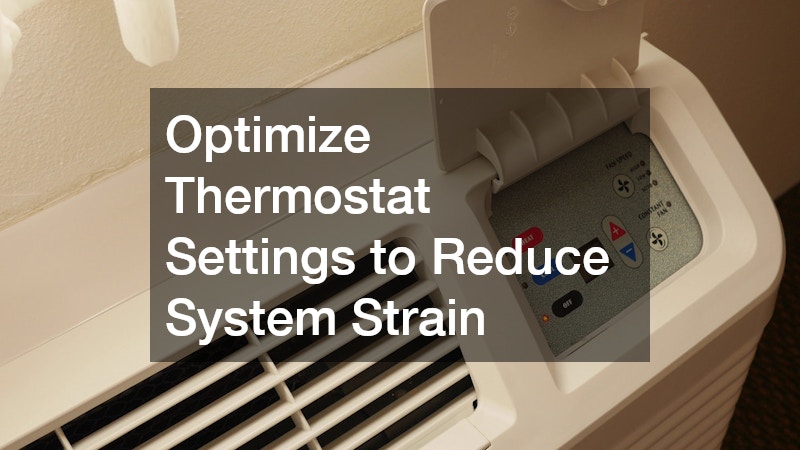
The thermostat acts as the brain of your climate control operations. How you communicate with this device directly influences how hard the mechanical components work over their lifetime. Many homeowners inadvertently shorten the lifespan of their equipment by micromanaging the thermostat or misunderstanding how the cooling and heating cycles actually function.
One of the most persistent and damaging myths is the idea that drastically lowering the thermostat setting will cool the house faster. If you come home to an eighty-degree house and want it to be seventy-two, dropping the dial to sixty will not change the speed or capacity of the cold air coming out of the vents. It simply forces the machinery to run continuously in a desperate marathon to reach an impossibly low temperature. These prolonged, maximum-capacity cycles cause extreme wear and tear on the compressor and fan motors, increasing the likelihood that you will soon be calling a professional for an unexpected HVAC repair.
Instead of drastic swings, the key to longevity is consistency and strategic, gentle adjustments.
-
Utilize temperature setbacks: When the house is empty during the workday, adjust the thermostat by seven to ten degrees closer to the outdoor temperature. This reduces the number of cycles the machine runs while you are not even there to enjoy it.
-
Gradual recovery: When returning the home to your comfort zone, allow the system time to reach the desired temperature gradually rather than demanding an instant drop or spike.
-
Keep the fan on “Auto”: Setting the fan switch to “On” means the blower motor runs 24/7, which burns out the motor much faster. The “Auto” setting ensures the fan only runs when actively heating or cooling.
Investing in a modern, smart thermostat is one of the easiest ways to automate these best practices. Smart thermostats learn your family’s daily routines and automatically adjust the temperature to maximize energy efficiency while minimizing unnecessary mechanical strain. They can sense when you leave the house and when you are returning, optimizing the runtime so the system is never working harder than it needs to. However, before purchasing a top-of-the-line smart thermostat, it is wise to consult with experienced ac contractors to ensure the new digital device is electrically compatible with your home’s existing control boards and wiring.
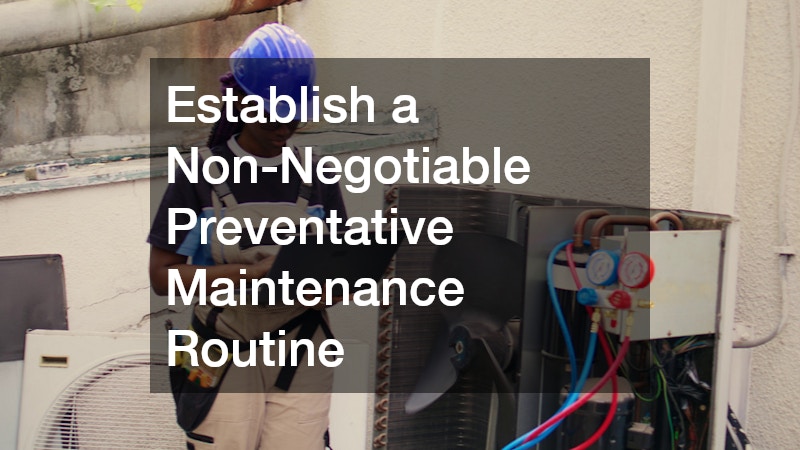
Establish a Non-Negotiable Preventative Maintenance Routine
You would never drive a car for a hundred thousand miles without changing the oil, rotating the tires, or checking the brake pads. Your home’s climate equipment operates under similar mechanical stress, running for thousands of hours every single year. Yet, preventative maintenance is frequently skipped to save a few dollars in the short term. This is a false economy. Professional, bi-annual tune-ups are essential for catching microscopic wear and tear before it evolves into a cascading system failure.
A professional inspection is drastically different from the basic maintenance you can do yourself. A trained technician possesses the tools to measure the invisible, electrical, and chemical metrics that dictate the health of the machinery.
-
Electrical component testing: Technicians will test the microfarad readings on capacitors. A weak capacitor forces the compressor to pull too many amps during startup, which can fry the compressor motor over time. Catching a dying fifty-dollar capacitor saves a two-thousand-dollar compressor.
-
Refrigerant charge verification: An undercharged or overcharged system cannot transfer heat effectively. Technicians use precision gauges to measure superheat and subcooling, ensuring the chemical refrigerant is at the exact manufacturer specifications.
-
Deep coil cleaning: Over time, the indoor evaporator coil becomes coated in a bio-slime, and the outdoor coil gets caked in microscopic dirt. Professionals use specialized chemical foaming agents to dissolve this buildup, restoring the system’s ability to breathe and transfer heat.
-
Safety mechanism checks: Technicians will verify that all high-limit switches, pressure switches, and flame sensors are operating correctly to prevent fires, gas leaks, or electrical shorts.
It is highly recommended to schedule these comprehensive inspections twice a year: once in the early spring before the intense summer heat begins, and once in the autumn before freezing temperatures arrive. Skipping even one year of a professional HVAC Service allows minor inefficiencies to compound.
To ensure this maintenance is done correctly, take the time to thoroughly vet the professionals you hire. Look for technicians who are fully licensed, insured, and certified by recognized industry organizations. Building a long-term, trusting relationship with reputable HVAC companies ensures that your equipment has a consistent medical history. Furthermore, many warranties require proof of annual professional maintenance to remain valid. If a major component fails prematurely, having a documented history of routine professional care will prevent the manufacturer from denying your warranty claim due to neglect.
Address Component Aging and Plan for Future Transitions
Even with pristine maintenance, flawless airflow management, and the best thermostat habits, mechanical components will eventually age and deteriorate. The final step in extending the lifespan of your system is knowing how to manage this aging process intelligently.
As the machinery crosses the ten-year mark, you must become highly observant. Listen for new, unusual noises. A slight rattle could just be a loose cabinet screw, but a high-pitched squeal could indicate a failing indoor blower motor belt or bearings. A clicking sound from the outdoor unit might signal a failing electrical contactor. Addressing these minor, seemingly insignificant anomalies immediately prevents them from putting stress on the larger, more expensive parts. Ignoring a dying contactor, for instance, can lead to uneven electrical voltage being sent to the compressor, effectively killing the most vital part of the equipment.
Eventually, however, you will face a scenario where a significant part fails on an older machine. At this junction, you must weigh the economics of repairing the aging equipment versus investing in modern technology. A helpful metric used by professionals is the “$5,000 rule.” You multiply the age of your equipment in years by the estimated cost of the current repair. If the resulting number is greater than $5,000, it is generally considered a poor financial decision to pour more money into the dying machinery. In these instances, opting for an ac replacement is usually the wiser, more economically sound long-term choice.
If your machinery is getting older, you can also extend its final years by easing its burden through infrastructure improvements.
-
Seal leaky ductwork: Up to thirty percent of conditioned air can be lost through tiny gaps in attic or crawlspace ductwork. Sealing these leaks with mastic paste means your equipment doesn’t have to work 30% harder to cool the house.
-
Upgrade home insulation: Adding a fresh layer of blown-in insulation to your attic creates a stronger thermal barrier, trapping the conditioned air inside and drastically reducing the system’s daily run cycles.
-
Evaluate electrical panels: Older units draw different amperages than highly efficient modern units. Ensuring your home’s electrical panel is up to code now prevents unexpected electrical stress on your current aging machinery.
Taking these proactive infrastructure steps not only provides a softer operating environment that helps your current, older unit survive a few more seasons, but it also perfectly prepares your home for the future. When the inevitable day finally arrives, having sealed ducts, excellent insulation, and an updated electrical panel will drastically simplify the process of a new local hvac installation, ensuring the next generation of climate control equipment starts its lifespan under the best possible conditions.
Conclusion
Achieving a twenty-year lifespan for your home climate control machinery is an entirely realistic goal, provided you are willing to invest a small amount of time and attention into its ongoing care. By mastering the fundamentals of unobstructed airflow, committing to a rigid schedule of filter replacements, and utilizing your thermostat with efficiency in mind, you remove the daily mechanical stress that causes premature failure. Furthermore, by partnering with qualified professionals for routine bi-annual inspections, you ensure that invisible electrical and chemical issues are resolved long before they can cause catastrophic damage.
Ultimately, caring for this equipment is about protecting the comfort and financial well-being of your household. The minor costs associated with a new air filter or a seasonal professional tune-up pale in comparison to the massive expense of replacing a neglected, broken-down machine years before its time. Do not wait for a breakdown in the middle of a heatwave or a blizzard to give your machinery the attention it deserves. Take action today: walk over to your return register to inspect the air filter, clear the brush away from your outdoor condenser, and pick up the phone to schedule your next seasonal tune-up. Your future self—and your wallet—will thank you.